
It’s a kind of crazy, the double standard of body hair that plagues the sexes. But the modern mandate that “women must be hairless” is shockingly recent. Historians point out that humans have been removing hair in various ways for millennia, but the current expectation that women remove almost everything below the eyebrows really took off in the early 20th century.
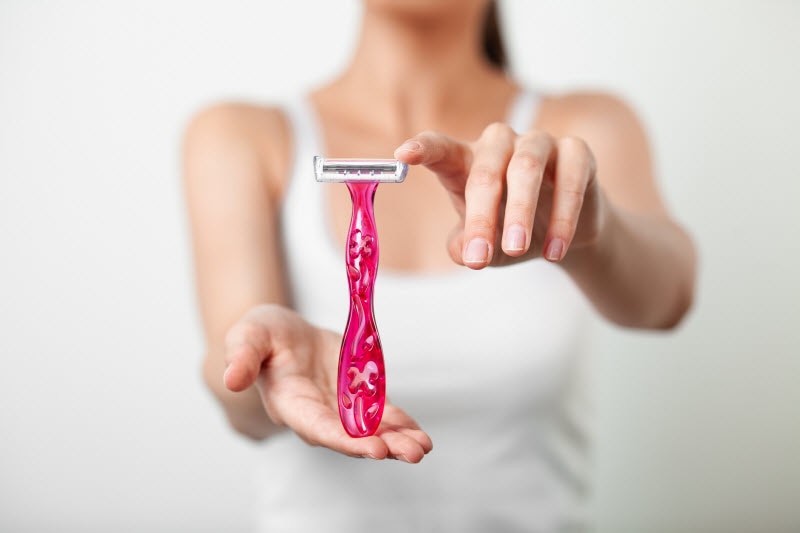
Once sleeveless dresses hit department-store racks in the 1910s, advertisers spotted an opportunity: newly exposed underarms suddenly became a “problem” in need of a solution. Gillette released the first women’s razor in 1915, accompanied by marketing that framed visible hair as embarrassing, unfeminine, even unclean. Shaving as a feminine necessity was a commercial invention that stuck.
By the 1940s, wartime nylon shortages meant bare legs were in. Magazines doubled down on the message. The postwar era layered on pin-up aesthetics, bikinis, miniskirts and Hollywood’s airbrushed ideal. By the 1960s, the expectation had ballooned: a “well-groomed” woman was presumed hairless from ankles to armpits to bikini line.
And while the counterculture briefly pushed back, the ’80s and ’90s brought the Brazilian wax, laser hair removal and a quiet, insidious pressure to remove more hair, not less. The hairless ideal is a commercial project reinforced by fashion, film, and decades of beauty marketing that effectively trained women to view their own body hair as an anathema to their own femininity.
Should you stop shaving your body hair?
The past few years have pushed people to question everything, including beauty norms, wellness rituals, gender binaries and identity politics. Gender is more fluid. Makeup is optional. Body positivity is a thing. And the long-standing expectation that women must be hairless is losing its grip. On TikTok, armpit-hair diaries pull in millions of views. In fashion, runways and campaigns have finally stopped pretending women are naturally hairless by default. And in pop culture, the shift has been pronounced as well. One of the earliest (and most unlikely) champions of visible body hair was the women’s razor brand Billie, which, in 2018, became the first to show real body hair in an ad.
Are you starting to wonder if you should you stop shaving? Keep shaving? It’s completely up to you. Your hair, your choice.
Here’s a clear look at the actual pros and cons of body hair.
Pros of not shaving your body hair
Body hair is functional
- Underarms & groin: Hair helps reduce friction, wick sweat and disperse scent.
- Pubic hair: Provides a barrier that can protect delicate skin from irritation, microtears and STIs transmitted through skin-to-skin contact (not all, but some).
- Leg/arm hair: Offers mild protection and sensory feedback.
Is it “more hygienic” to remove it? No. Dermatologists note the opposite: shaving or waxing can cause micro-injury, irritation, as well as folliculitis, ingrowns and infections.
Your sensitive skin will thank you
Razor burn, bumps, itchiness, hyperpigmentation—some people’s skin just does not love shaving. Going natural means you get to skip the inflammatory aftershocks entirely. And if you’ve ever dealt with regrowth itch or razor burn before a beach day, you already know: sometimes the “finished” look costs more than it’s worth.
Your wallet will thank you
- razors: $15+ every few weeks
- waxing: $70–$120 per session
- laser: $300–$2,000 per area
Not shaving is basically free. A survey conducted by the American Laser Centers in 2008 shows that an average woman spends from $10,000 to $23,000 to remove body hair over a lifetime.
Gives you a break from performative grooming
Plenty of women describe not shaving as a kind of quiet, private rebellion. It affords the freedom from being “on display,” relief from grooming anxiety and the novelty of seeing your own body unmodified.
Cons of going natural
Social pushback
Even with the cultural shift, women with visible body hair still get stares, comments, DMs and unsolicited opinions. As ridiculous as that sounds, conspicuous body hair does require a thick skin.
Odor retention
Hair itself doesn’t cause odor, but it can trap sweat and bacteria. If you’re prone to stronger body odor, the adjustment period can take some tweaking: better soaps, breathable fabrics, maybe dietary shifts or stronger deodorant.
Aerodynamics
Some people genuinely prefer the feeling of smooth skin, especially for activities such as running, cycling, yoga and swimming.
Pubic hair snafus
Pubic hair can tangle, snag or feel uncomfortable for some. Movement from clothing or activities causes hair to rub and knot.
Personal aesthetics
You may simply prefer the aesthetics of shaving. This is the part body hair fundamentalists tend to ignore: sometimes people shave because they like it. Pure preference counts as a valid reason to modify your hair.
To shave or not shave
There’s no universal prescription here, because the question is more about agency than hair. The current shift isn’t urging women to abandon razors en masse; it’s challenging the idea that a hairless body is the neutral baseline from which all femininity must begin. Once you see that expectation clearly, it becomes easier to ask whether the ritual still belongs to you.
For some, shaving is genuinely a form of care: the sensory pleasure of smooth skin, the comfort during exercise, the small act of order in a chaotic world. There’s nothing regressive about liking the look or the feel. If you do want to shave, it is quick, and low-risk. And dermatologists consistently say shaving is fine, especially compared to harsher methods like waxing, sugaring or laser, which can cause burns or scarring if done improperly.
For others, shaving reveals itself as something inherited rather than chosen. It’s a chore absorbed in adolescence, reinforced by peers, normalized to the point where not shaving feels transgressive. Pausing, even briefly, can be clarifying. You discover quickly whether the hair bothers you, or whether the discomfort comes from imagining someone else’s reaction.
If the fear of social judgment looms large, that’s not a personal weakness. it’s evidence of how effectively beauty norms police women’s bodies. Hair becomes a surprisingly honest barometer of how much of your appearance you curate for yourself versus an imagined audience.
In the end, the most radical outcome isn’t joining the “hairy” camp or the “smooth” camp. It’s recognizing that both are legitimate. Ultimately you get to choose what to remove, what to keep, and why—without apology, without performance, and without assuming that one option is inherently superior. Make the decision for yourself, not because you are wanting anyone else’s approval. If you’re unsure, you can always let the hair grow for a week and see what you learn.
Featured Products