
A bloated belly, a piercing migraine, a perpetual desire to bawl—premenstrual symptoms can be vexing enough, but women also have to deal with another headache: Deciding on a period product that’s both healthy for them and the environment.
Enter menstrual cups.
First introduced as far back as 1937, menstrual cups have recently experienced a wild resurgence. Part of it is driven by the new knowledge that some tampons—a mainstay in most women’s lives and handbags—are laced with harmful heavy metals like arsenic, cadmium and lead. Part of it is fueled by an increased interest in sustainable consumption and consummate comfort. Whatever the case may be, the numbers alone indicate that menstrual cups are here to stay: the market for the alternative feminine hygiene product is expected to reach roughly $2.5 billion by 2032.
If you’re new to the trend, trust that you’re not alone: Many women find the mere idea of a menstrual cup messy, concerning, and, well, odd. And yet, these smart devices are ultimately a cinch to use—and may offer a host of benefits. Let’s see what they’re all about, and how you might join the thousands of others to toss their pads and tampons in the wastebasket.
What are menstrual cups?
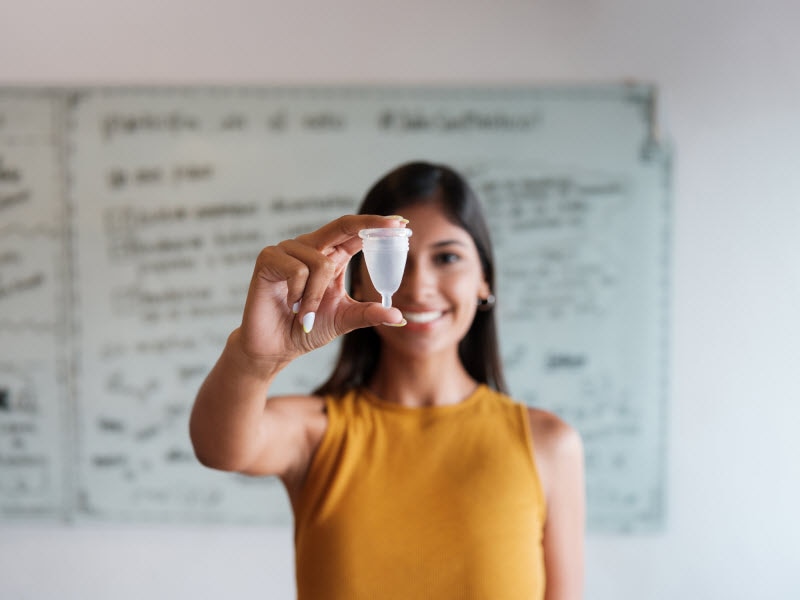
Menstrual cups are more or less precisely as they sound: they’re a small, funnel (or bell)-shaped cup designed to “catch” period blood. Typically made out of thermoplastic elastomers, natural rubber, silicon or latex, they’re flexible enough to be inserted directly into your vagina, where they collect menstruation.
How do they work?
Think of a menstrual cup as a sort of suction. Once it’s inserted, your vaginal muscles clamp down, so to speak, around the cup, thus creating a seal that staves off leaking and creating a tiny container for your flow. Meaning, menstrual cups work in a similar way as a tampon: They “take in” your menstrual fluid, but, as opposed to a tampon (which absorbs your period blood), they’re washed and reused rather than disposed of.
What are some menstrual cup benefits?
Menstrual cups’ growing popularity is not without cause. Here are just a few of the reasons women have adopted them:
Enhanced sustainability
For many women, one of the most compelling reasons to use a menstrual cup is the fact that they’re reusable. With proper care, a quality menstrual cup can be used for up to five to ten years (bearing in mind that they’re free of tears and holes). This is a stark contrast to its tried-and-true alternative: It’s estimated that seven billion tampons are discarded annually in the United States alone. Improper disposal of them, such as flushing them down the toilet, also takes a huge toll on the environment, while tampon applicators can wreak havoc on sea life—to say nothing about the environmental cost of producing tampons in the first place. All told, menstrual cups are an eco-friendlier substitute to their counterparts.
Improved cost-effectiveness
On average, a woman goes through 11,000 single-use period products in a lifetime. If tampons have long been your jam, you’re looking at $10-$30 in tampons per month. Meanwhile, a menstrual cup ranges in price between $20 and $40, thereby potentially saving you hundreds per year.
Decreased time
Mastering the use of menstrual cups requires time, but once you do, you may actually save yourself several minutes: Menstrual cups generally hold more menstrual blood than tampons, and many women report emptying them only twice a day.
Greater flexibility
Swimming, scuba diving, jumping, dancing, flying through a HIIT class, even showering—all are more than feasible (and enjoyable!) with a menstrual cup securely in place.
Enriched comfort
Hundreds of women indicate that menstrual cups are preferable to pads and tampons simply because they offer a more comfortable experience. You know that tiresome moistness you may have when you’re wearing a pad, or even a tampon whose string has gotten wet? Gone. The same goes for the vaginal dryness that tampons frequently spawn.
…and what are the drawbacks of menstrual cups?
No product is perfect—including menstrual cups. Some of the biggest complaints surrounding them include:
Potential messiness
One of the biggest hindrances to menstrual cups is getting the hang of using them. More to the point, removing them can equate to a spill, particularly before you’ve refined your technique. In addition to taking your time when you remove your cup, do your best to relax: the more anxious you are, the more difficult the extraction will be—and the higher the risk of an unnecessary slop.
Vaginal irritation
Another valid concern? Vaginal irritation. An ill-fitting menstrual cup, improper insertion, or an unclean cup can all prompt aggravation; ditto for inserting a cup without lubrication. My advice: Use a water-based personal lubricant like Nixit to ease the whole process.
An “off” fit
As with most things in life, menstrual cups come with some trial and error—and, for most women, this boils down to finding the right size cup. Many brands now offer a variety of sizes, ranging from extra-small to large. Generally speaking, small cups are recommended to women 30 years and younger, while larger cups are suggested to those who tend to have heavier menstrual flows, are over the age of 30, and/or have given birth vaginally. The flexibility and firmness of the menstrual cup may also play a role in how well it fits with your unique anatomy. You could consult with your OBGYN to get a better feel for, well, how it will feel, or you could experiment. But once you do find the perfect fit? You ought to feel golden.
How to use a menstrual cup
Remember how foreign using a tampon was the first time?
Utilizing a menstrual cup on your virgin attempt may have the same effect. Keep in mind, though, that this, too, will get easier with time.
After thoroughly washing your hands and applying a lubricant to the rim of your product, get yourself in the right position. For some, this may mean inserting the cup while sitting on the toilet; others prefer to be lying down. Either way, you’ll fold the menstrual cup into a C or U shape before inserting it into your vagina (make sure the rim is facing up), much like you would a tampon. Rotate it one full circle so that it springs open; some, in fact, give off a “pop.” Once it’s in, feel with your fingers to ensure the cup has completely opened (you ought to feel a touch of resistance). Some find that a menstrual cup is barely discernible. Others don’t notice it at all.
Removing it is a different matter, but becomes effortless through practice. Recall the suction brought up earlier? You’ll first need to break that, which can be accomplished by placing your thumb and index finger inside your vagina. Then, tug gently on the stem of the cup until you find the base. Just as carefully, remove the cup and empty your menstrual blood in a toilet. Wash it thoroughly before reinserting it. And if you’re done with it for the month? Wash the cup with a gentle soap, or boil it in hot water. Some manufacturers have their own set of cleaning instructions, so be sure to consult those too.
All about menstrual cups—and period products general: Your FAQs
Is a menstrual cup different than a menstrual disc?
Yes. While the two designs possess the same primary function—both can be inserted down there to “trap” your menstrual flow—a menstrual disc is, as its name states, shaped like a disc. More specifically, a menstrual cup is meant to rest in your vagina just below your cervix. A mental disc, on the other hand, is crafted to sit at your vaginal fornix behind your pubic bone, or the spot between your vaginal canal and your cervix. While one isn’t better than the other, menstrual discs seem to be favored by women who want to continue having sexual intercourse during their periods.
Can a menstrual cup get stuck?
Contrary to what you may have heard on social and beyond, a menstrual cup can’t “disappear” inside of your vagina, nor can it suck out your cervix. (Ah, the tales.) That said, the more stressed you are when removing your cup, the trickier the task will be. Remember, your pelvic muscles hold your menstrual cup in place, and the more they tense up, the more complicated the removal. Breathe deep, take a walk, or relish a warm bath—all can ease everything south of the border. Then, try squatting as you attempt to remove the cup: It’ll narrow the space between your cervix and vaginal opening and help you slide the cup out.
Are menstrual cups safe?
By and large, yes, particularly if you maintain yours well and always have clean hands when inserting and removing one.
However, although rare, menstrual cups can trigger a vaginal infection (such as a yeast infection). More often than not, this is caused not by the menstrual cup but by bacteria on your hands—if ever there’s a reason to triple check that your hands are clean when “operating” one. Even more rarely is the potential of toxic shock syndrome, or TSS. To mitigate your chances of developing this serious complication, be sure, once again, to wash your hands before each use and ensuring the cleanliness of your chosen cup.
What about tampons?
You may be asking, do I have to give up tampons altogether?
In the end, this is a highly personal decision. Rest assured that dozens of medical experts insist that the levels of toxic metals discovered in tampons are negligible at best—so much so that, while present, they may not contribute to a harmful effect.
Given that research on tampons is in its preliminary stages, however, you might want to be judicious about your selections if you stay with them. The term “organic” doesn’t necessarily mean your tampons will be free from heavy metals, but you can search for products that are fragrant and colorant-free and don’t use plastics.
Any word on period underwear?
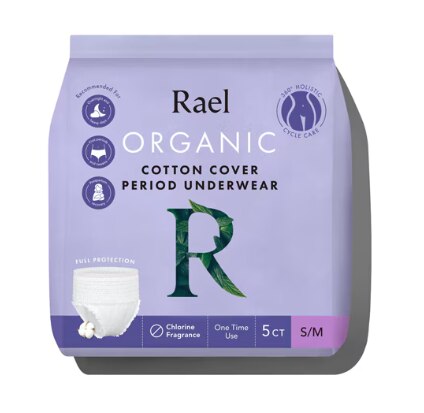
Period underwear functions, in many ways, much like a pad: Rather than being inserted like a tampon, disc, or cup, these garments are composed of absorbent material—such as microfiber polyester—and a moisture barrier to collect menstrual blood, soak up wetness, control odor, and circumvent leaks. The fact that they’re reusable, and far less cumbersome than a bulky pad, are two of period underwear’s brightest selling points. That, and increasing R & D, has led to pieces that are surprisingly comfortable and attractive.
Bear in mind, however, that period underwear, much like tampons, have recently come under scrutiny: Research shows that some period underwear brands contain PFAs (or perfluoroalkyl and polyfluoroalkyl substances). Also known as “forever chemicals,” these substances can lead to a handful of health complications when one is exposed to them for an extended period, including:
- Liver inflammation
- Increased risk to certain cancers
- High cholesterol
- Pregnancy issues (like low birth weight)
Indeed, in 2023, Thinx—once one of the most popular period underwear brands around—settled a substantial lawsuit after third-party testing demonstrated that the company’s products featured PFAs.
Your best bet, should you opt for this route? Look specifically for garments that are devoid of these chemicals and are OEKO-TEX-certified.
Menstrual cups: the last period product you may buy
As this article hopefully demonstrates, menstrual cups can be a boon for women, especially those who frequently engage in physical activity and want a greener, safer alternative. And yet, it’s a deeply individual decision—right up there with the partner you chose and the type of bra you wear on the daily.
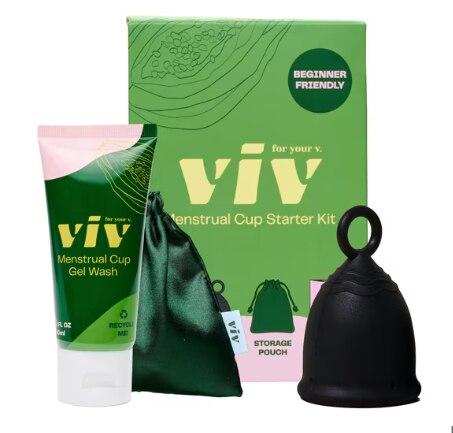
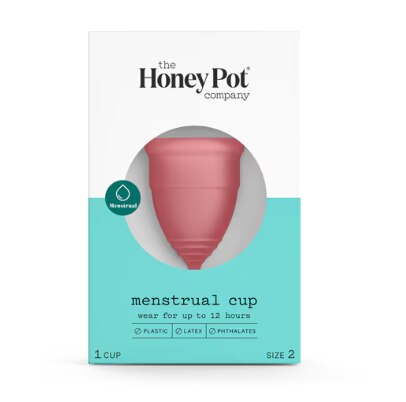
If you do choose to give menstrual cups a whirl, you’re in luck: there are dozens of exceptional, affordable, and effective products on the market. The Honey Pot Silicone Menstrual Cup, for one, is phthalate and plastic-free, kind to sensitive skin, and approved for overnight use. Viv for Your V version is made with 100% medical-grade silicone and securely holds up to four “super” tampons’ worth of period blood in place. (Its ring stem also translates to simpler removals.) Whatever brand you choose, know that you’re doing your body and the planet good—so much so, you may say sayonara to that decision-weary premenstrual headache.~
Featured Products