

Just a 10-minute walk each day has significant benefits for our long-term wellbeing. But many of us think we have to suspend our daily step streak as soon as the year’s first snowfall arrives. Far from it. If you can embrace the initial challenge of winter walking and gear up appropriately, you’ll unlock a whole new layer of mental and physical benefits.
From footsteps that crunch to breaths that linger in the icy air, winter walking is the invigorating upgrade that your body will thank you for.
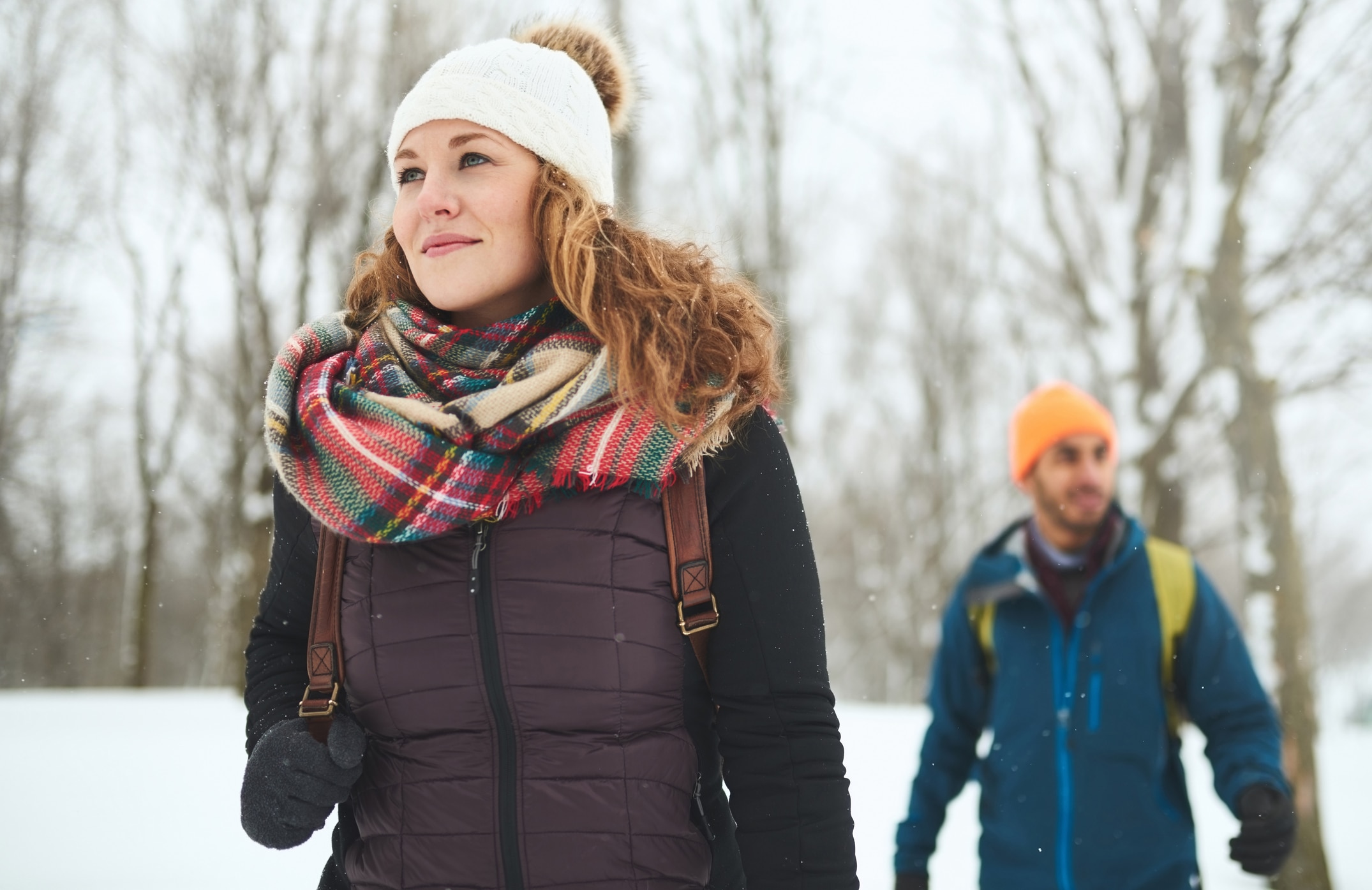
Don’t believe these winter walking myths
Getting outside in the first place is the hurdle that many of us struggle to overcome, often because of misguided concerns. Let’s banish these misconceptions right off the bat…
Cold will give you a cold
Viruses, not temperature, are responsible, and you’ll find more of them where people are staying warm indoors.
You should wrap up your walking for winter
Layer up, sure. Wrap it up entirely? Bad idea. We humans are not designed to hibernate during winter. And as cold exposure pioneers have shown, cold plunging, walking, and exercise push our physical and mental capabilities.
A walk is a walk
In fact, walking in winter is a whole new ball game, with shorter step lengths and a reduction in average speed of around 19 feet per minute. Yet for all those short, tentative steps, your energy consumption and metabolic workload will actually be higher.
The benefits of winter walking for the body
As with exercising in the heat, which also has its own advantages, walking in winter introduces a new element to the exercise equation. Cold weather imposes an additional stress on the body, forcing it to work harder to maintain balance. That means you’ll get more from dashing through the snow than striding along in the sunshine.
Burn more calories
A leisurely stroll with the dog in balmy weather can burn up to 300 calories an hour, depending on your body frame size. That rate rockets, however, when you’re battling the cold. Research shows that hikers burn 30% more calories between 16 and 23 degrees Fahrenheit than people exercising in warmer weather. Admittedly, that temperature range is at the extreme end of the spectrum for a casual winter walk, but the general principle in play is that shivering to stay warm burns more calories.
Any cold weather exercise also stimulates the appetite, so you’ll need to factor in the metabolic boost to maintain your regular daily calorific targets through winter.
Stimulate the immune system
Exposing your body to cold temperatures during a winter walk should also give your immune system a boost. The mild stress of chilly conditions makes your immune system more resilient, while any exercise will elevate your blood flow, increase the production of antibodies, and counteract inflammation. Plus there’s the benefit to the immune system of being in nature and breathing fresh air.
On the subject of breathing, you can reasonably expect to see an improvement in lung capacity from regular winter walking. A 2023 study of Polish adult men confirmed that “regular physical activity in the open air during the winter brings measurable health benefits” of which improved lung capacity was one.
That’s certainly a benefit that professional fitness coach and high-altitude climber Desiree Winkel can confirm. Having completed her quest to scale seven mountain peaks above 18,000 feet before turning 60, she notes that, “When you breathe in, you feel the cold air going so much deeper into your lungs.” At altitude, however, each of those breaths will become harder to take, so advance gently.
Vitamin D production
Our bodies have difficulty in obtaining vitamin D from food alone, to the point where two-thirds of Americans may be chronically deficient. Exposure to sunshine is one of the main ways our bodies can synthesize this essential vitamin, yet daylight hours are in short supply during winter. For that reason, any activity that entices us outside will help stimulate vitamin D production where sufficient sunlight allows, with positive effects for our bone, gut and immune system health, among others.
The benefits for the mind
The creeping onset of the “Winter Blues” is by no means inevitable. In fact, regular exercise such as winter walking can allow you to make great strides in warding off the symptoms of Seasonal Affective Disorder.
SAD begins with the disruption to our natural sleep cycle and circadian rhythms that winter imposes. These play havoc with our hormones, making us feel tired, lethargic and eventually depressed.
While a vigorous winter walk is no quick fix, it can trigger a welcome release of so-called “happy hormones” including:
- Endorphins, the body’s natural painkillers
- Dopamine, the brain’s motivation manager
- Serotonin, produced in the gut and vital for mood regulation
- Norepinephrine, for alertness and focus
In addition, the natural light exposure of a daytime walk suppresses the release of melatonin, regulating the all-important circadian rhythm.
Precautions to take with any winter walk
For all the benefits, walking in cold weather inevitably carries some risks that wouldn’t apply to a regular summer season stroll.
Injuries
According to Dr. Geoffrey Van Thiel, an orthopedic surgeon, we’re at greater risk of strains and sprains in winter. That’s because cold temperatures cause the muscles to stiffen. So if you’re going to walk in the cold, it’s important to warm up first.
Coach Winkel agrees. “You really need to have a proper warm up. It’s a natural process of the body when you are in cold weather to start to cramp up,” she says. “Make sure that all your tendons and joints are moving. Otherwise you’re going to have so much muscle ache and stiffness.”
Hypothermia and frostbite
Staying warm is vital, too. Not only does cold weather reduce the amount of time we can exercise (a 14.4 degrees Fahrenheit drop in temperature will lower muscle output by 31%), but we’re also at greater risk of hypothermia and frostbite when exposed to low winter temperatures for extended periods.
Here’s how to protect yourself:
-
Insulate your extremities
Merino wool socks are hard to beat for your feet, while gloves, ear muffs and a beanie will complete the package for your most vulnerable areas of exposed skin. A little lip balm goes a long way too.
-
Get warm, but never wet
Never let sweat accumulate around your core, because once you stop moving, you’ll start shivering. Layer up, starting with a sweat-wicking base layer, then add something snug but breathable, and finish off with a lightweight waterproof and windproof shell outer layer.
-
Hydrate
Even in icy air, you still need to keep the fluids coming, but something warm will work wonders from within.
Accidents
One of the constraints of winter walking is that there’s less daylight available to work with. By contrast, there’s more opportunity for traffic, cyclists or runners to collide with a stealthy walker. Make sure you stand out from afar with reflective strips on your outer layer and wearable lights or a headlamp.
[/vc_column_text][/vc_column][/vc_row]
Featured Products