
Allulose is a low calorie sugar that occurs naturally in small amounts in foods like figs, raisins, maple syrup and wheat. It’s also an ingredient you’ll find in low sugar foods such as protein bars, cereals and yogurts and you can buy it in granulated or liquid form to use at home.
Over the past few years, this alternative sweetener has become a social media favorite, with people sharing how they’ve swapped table sugar for allulose to support their health goals. The appeal is that allulose tastes like sugar, looks like sugar and works like sugar in recipes, but it provides about 90% fewer calories and doesn’t spike blood sugar the way regular sugar does.
Keep reading to learn how allulose works in the body, its potential benefits, possible side effects and who might want to consider using it.

What is Allulose?
Allulose is a “rare sugar” that shows up naturally in only tiny amounts in wheat, dried figs, raisins, maple syrup and molasses. On paper it looks a lot like fructose, and in chemistry-speak, it’s a C-3 epimer, which means the two molecules are identical except for a small flip at one carbon. This small difference is what changes how your body processes it.
Because foods only contain trace levels, the stuff you see on shelves is made by converting fructose (often from corn) with specific enzymes that help with this conversion efficiently for large scale production.
On the regulatory side, the FDA lists allulose as GRAS (Generally Recognized as Safe), and it gets friendlier labeling treatment than standard sugars. Calories are the main difference, with table sugar providing 4 calories per gram while allulose contains 0.2 calories per gram (roughly a 95% fewer calories).
How Does Allulose Work in the Body?
Allulose is absorbed in the small intestine, but unlike table sugar, it isn’t used for energy and most of it exits the body unchanged within 24 to 48 hours. In practice, it behaves like a non-digestible carbohydrate.
Your cells don’t accept allulose because its slightly different structure means key enzymes (like hexokinase) don’t process it the way they do glucose or fructose. Regular sugar gets converted to cellular fuel, which raises blood sugar and insulin levels, but allulose moves through without that metabolic ripple, so its glycemic impact is minimal and it doesn’t spike blood sugar or insulin.
Recent research also suggests allulose may encourage the release of gut hormones linked to fullness, GLP-1 and PYY, which may promote slower gastric emptying and help you feel satisfied after meals.
Potential Benefits of Allulose
Research on allulose is still developing, but the early picture looks encouraging. Here’s why people reach for it instead of regular sugar.
May encourage satiety via gut hormones
Early human research suggests D-allulose may encourage the release of appetite regulating hormones, including GLP-1 and PYY, which help signal fullness and may promote slower stomach emptying. So, along with its neutral effect on blood sugar, allulose may help you feel satisfied after a meal and support more comfortable pacing between meals.
Blood sugar management
When you combine allulose with regular sugar (sucrose) at a meal, studies show it can blunt the usual post-meal rise in blood sugar and insulin. As well, allulose may support metabolic control by encouraging GLP-1 and PYY release to promote appetite regulation and more steady blood sugar after meals.
In general, the more allulose you use (within typical serving amounts), the stronger that smoothing effect appears to be. So adding allulose to your meal may support steadier levels after you eat, combatting unwanted spikes in glucose and insulin.
May support weight management goals
Allulose has about 95% fewer calories and on nutrition labels, the FDA lets brands list it at 0.4 calories per gram, which is still far lower than standard sugar. Swap some (or all) of the sugar in your routine for allulose and you can cut daily calories by a decent amount, which is a practical way to support weight balance goals.
Aside from calorie savings, early research shows allulose may help you feel fuller for longer by encouraging GLP-1 and PYY signals that help manage cravings.
Works like real sugar in baking and cooking
Allulose behaves like sugar in the oven and on the stovetop. It browns and caramelizes for golden crusts, glossy glazes and rich flavor, something stevia, monk fruit and erythritol can’t replicate (they don’t brown or add bulk the same way). It also avoids the bitter or “chemical” notes some sweeteners leave behind.
How to Use Allulose
Allulose comes in granulated and liquid forms, so it’s easy to use day to day. You can often swap it 1:1 for sugar, keeping in mind it’s about 70% as sweet as table sugar, so adjust to taste. It dissolves easily, holds moisture and helps create soft, chewy textures.
Because it’s heat-stable and participates in the Maillard reaction, allulose browns and caramelizes like regular sugar, giving baked goods golden crusts and rich flavor. It also caramelizes a bit faster than sugar, so lower the oven by about 25°F and start checking early. It works well in cookies, cakes and muffins; for drinks, sauces and marinades; and research suggests that partial substitution (replacing up to 25% of the sugar), often preserves ideal texture in baked goods.
A bonus is that it stays smooth in frozen desserts and sauces with no gritty crystals or cooling sensation like you might get with erythritol. Always check product labels for serving guidance, as individual tolerance can vary.
Safety, Side Effects and Serving Size
Allulose is listed by the FDA as GRAS for use in foods. Most people do fine with moderate amounts, but tolerance varies.
Reasonable serving size suggestions are:
- Max per sitting: 0.4 g/kg body weight (about 24 g for a 132-lb adult)
- Max per day: 0.9 g/kg body weight (about 54 g for a 132-lb adult)
Side effects are usually only seen at higher intakes because allulose is absorbed but not used for energy and can draw water into the intestines. They include:
- Abdominal discomfort or cramping
- Bloating and gas
- Nausea
- Loose stools/diarrhea
If you have a sensitive digestive system or a history of issues like IBS, go slowly. Using a lot at once can lead to tummy discomfort, so start with small amounts to see how you do and increase gradually as tolerated.
Who Might Consider Allulose?
Allulose can be a smart option for many. It’s especially ideal for people managing blood sugar, like those with type 2 diabetes or prediabetes, because it has essentially no effect on blood glucose and may help lessen the usual after-meal rise when used with food. It’s also useful if you’re reducing calories for weight goals or following low-carb or ketogenic styles of eating, and for bakers who want a natural tasting substitute that behaves like sugar.
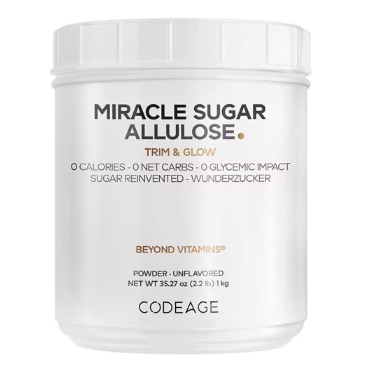
If you’re looking for a convenient allulose option, Codeage Miracle Sugar Allulose Powder is made from 100% allulose in an easy-to-use powdered form. This zero-calorie, zero-net-carb sweetener offers a versatile alternative for baking, beverages, coffee, tea and everyday recipes. With 100 servings per container (a 3+ month supply), it provides a practical way to incorporate allulose into your routine. It’s also vegan, non-GMO, gluten-free, soy-free and dairy-free, with no artificial ingredients or preservatives, and is manufactured in the USA in a cGMP-certified facility.
Featured Products