
The microwave is a miracle of modern life. Although we may take this little oven for granted, it saves us countless hours by cooking or heating our food in a fraction of the time of a conventional oven.
But that doesn’t mean the microwave should be used for all foods. Putting some types of food into the microwave may compromise its taste or nutritional value. In extreme cases, it might even be dangerous to your health.
Here are some foods you should never put into the microwave.
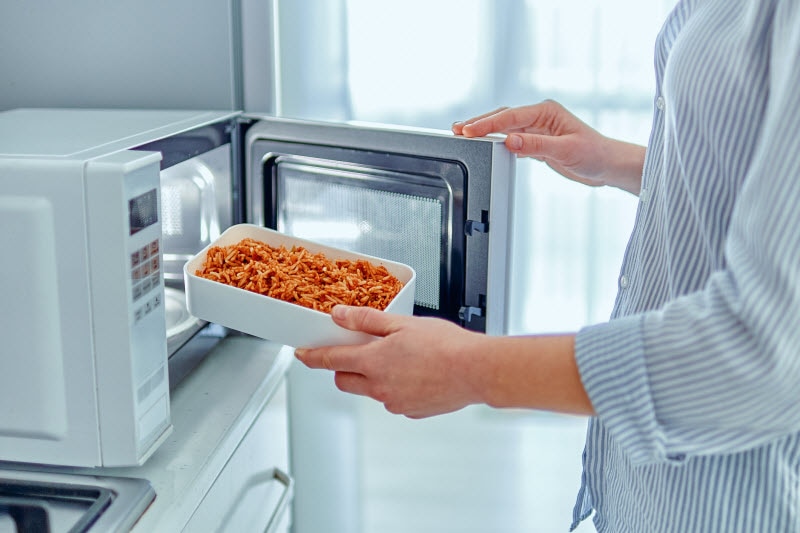
What Not to Put in a Microwave, According to Experts
Mushrooms
Microwaving mushrooms is a bad idea, according to Destini Moody, a registered dietitian at Live it Up.
“The radiation in the microwaves actually changes the very chemical structure of this fungal food, which has been shown to cause digestive distress in some people,” she says.
In addition, microwaving them first and not eating them immediately can give harmful bacteria more time to grow, Moody says.
If you insist on microwaving mushrooms, “make sure to eat your mushrooms very soon after that buzzer sounds” she says. That way, you will lower the risk of food poisoning.
Eggs
Reheating eggs in the microwave is probably fine, but don’t try to cook an egg with the shell on it.
When you put a whole egg inside the microwave, the whites and yolk heat at such a fast pace that it creates steam, says Mario Hupfeld, co-founder at NEMIS Technologies, a company that provides tools to test for Listeria, Salmonella and E. coli in food products.
Because of the shell, the steam can’t escape, and the pressure keeps building,” he says. “It usually ends up exploding inside the microwave.”
If the shell had any Salmonella or other bacteria on it — which Hupfeld says “happens more often than you think” — the mess can go everywhere.
“It can land on other food, your counter or all over the oven,” he says.
Leafy greens
Vegetables such spinach, kale and other leafy greens contain vitamins that are sensitive to heat, says Kristen Carli, a registered dietitian with WowMD.
These vitamins include vitamin C and folate.
“Microwaving can cause greater nutrient losses compared to quick sautéing or steaming, especially if liquid is added,” Carli says.
Breast milk
Heating breast milk in the microwave can be potentially dangerous, says Dr. Menachem Jacobs, medical co-founder of Outlive Biology and a resident physician at Yale New Haven Hospital.
“It heats unevenly,” he says. “This creates dangerous hot spots that can scald a baby’s mouth, even if the bottle feels cool to the touch.”
In addition, the rapid heat destroys the immunoglobulin proteins.
“These are the specific antibodies that protect your baby from getting sick,” Jacobs says. “You basically turn liquid gold into sugar water.”
A better option is to heat the milk in a bowl of warm water.
Hot dogs
At high heat, processed meats that are grilled or microwaved can pose a great harm to the body, Moody says.
“Due to the extremely high heat and radiation from microwaving, the nitrates in the meat react with the heat and produce cholesterol oxidation products, which cause inflammation in the body,” Moody says.
She adds that this inflammation can increase the risk of chronic diseases, particularly cancer.
In addition to hot dogs, you should not use the microwave to heat other highly processed meats, such as bologna and some sausages.
Cruciferous vegetables
Vegetables such as broccoli, cauliflower and Brussels sprouts are great for your health. But popping them in the microwave can be a mistake, Carli says.
“These vegetables are rich in glucosinolates, sulfur-containing compounds linked to cancer protection,” she says. “Microwaving can degrade these compounds.”
Jacobs notes that broccoli can be a nutritional powerhouse. “It is a great vegetable full of antioxidants called flavonoids,” he says.
But microwaving broccoli — especially in water — “destroys nearly all of those good compounds,” according to Jacobs.
Instead, steam it gently over the stove, which preserves many of the nutrients.
“If you want the health benefits, take the extra five minutes to steam it properly,” he says.
Leftover rice
Uncooked rice often has spores of a microbe called Bacillus cereus, Jacobs says. Cooking doesn’t always kill them.
If you leave rice out at room temperature, those spores develop into bacteria that generate poisons. The microwave won’t eradicate those pollutants, Jacobs says.
“I see patients with serious food poisoning from this often,” he says. “We call it ‘fried rice syndrome.’”
If you didn’t put the rice in the fridge straight after you cooked it, don’t try to save it, he adds.
Many other types of leftovers
By its very nature, microwaving food heats it unevenly.
“From a microbiology perspective, you want to avoid microwaving anything where uneven heating lets bacteria thrive,” Hupfeld says.
Processed meats and leftovers are “always at the top of my list for this reason,” he adds.
“If you don’t heat them at the optimum temperature, you’re left with a piece of meat that’s still cold in the center, and pathogens like listeria will easily survive,” Hupfeld says. “We catch this stuff constantly in testing.”
Hot chili peppers
Capsaicin is the chemical that gives peppers such as habaneros and jalapeños their spicy flavor. The capsaicin is vaporized by high heat when you microwave them, Jacobs says.
“This produces a steam that functions exactly like pepper spray,” he says. “The blast of hot steam hits your face as soon as you open the microwave door. It instantly burns your throat and eyes.”
Jacobs says he has witnessed people who find it difficult to breathe due to severe lung irritation caused by the fumes.
To keep the air in your kitchen safe to breathe, he recommends always roasting peppers in an oven or on a grill.
Featured Products