
skip to main content

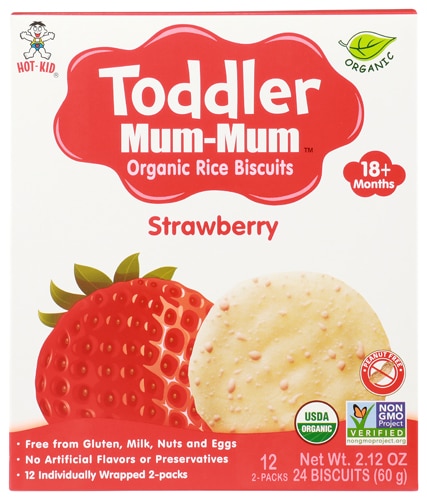
Mum-Mum Toddler Organic Rice Biscuits Strawberry -- 12 Packs


Mum-Mum Toddler Organic Rice Biscuits Strawberry
  • Our price: $4.29

  • +

Added to My List as a guest.

Your guest list will be saved temporarily during your shopping session.

Sign in to add items to your saved list(s).

1 item added to your list

Mum-Mum Toddler Organic Rice Biscuits Strawberry -- 12 Packs

Oops! Something went wrong and we were unable to process your request. Please try again.

  • Guaranteed Authentic

    100% Authentic

    • ✓ Products sourced directly from brands or authorized distributors
    • ✓ No third-party resellers
    • ✓ Products stored and shipped in conditions that ensure quality
    • ✓ Vitacost is 100% committed to your well-being and safety
  • Non-GMO Project Verified

Mum-Mum Toddler Organic Rice Biscuits Strawberry Description

  • 18+ Months
  • Peanut Free
  • USDA Organic
  • Non GMO Project Verified
  • Free from Gluten, Milk, Nuts and Eggs
  • No Artificial Flavors or Preservatives
  • 12 Individually Wrapped 2 Packs

Your little one has transitioned from Baby to Toddler and is now walking, talking and feeding him or herself! It's now time to transition from Baby Mum-Mum to Toddler Mum-Mum Rice Biscuits, a tasty, organic choice for your child.


Oven baked and individually wrapped for freshness, Toddler Mum-Mum is a perfect snack for home, daycare, play dates or for taking with you on-the-go!


The first three years of your child's life is the ideal time to introduce lifelong healthy eating habits. Avoiding canned, artificially flavored, or highly processed foods will set the standard for what food is supposed to taste like and Toddler Mum-Mum is an excellent choice for snacks. These rice biscuits are simply delicious; they're organic, gluten-free, egg-free and peanut-free, without any artificial flavor and preservatives and only lightly and naturally sweetened.


Directions

Always supervise your child during feeding. Please consume as soon as possible after opening package.
Free Of
GMO, gluten, milk, nuts, eggs, artificial flavors or preservatives.

*These statements have not been evaluated by the Food and Drug Administration. This product is not intended to diagnose, treat, cure, or prevent any disease.


Nutrition Facts
Serving Size: 1 Pack (8 g)
Servings per Container: 12
Amount Per Serving% Daily Value
Calories20
Total Fat0 g0%
   Saturated Fat0 g
   Trans Fat0 g
Cholesterol0 mg
Sodium15 mg1%
Total Carbohydrate5 g3%
   Dietary Fiber0 g0%
   Total Sugars1 g
     Includes 1g Added Sugars4%
Protein0 g
Vitamin D0 mcg0%
Calcium0 mg0%
Iron0 mg0%
Potassium0 mg0%
Other Ingredients: Organic rice flour, organic sugar, sea salt, natural strawberry flavor, citric acid (acidity regulator), gelatin, color (purple carrot juice concentrate).
Produced in a peanut free facility.
Product of China.

The product you receive may contain additional details or differ from what is shown on this page, or the product may have additional information revealed by partially peeling back the label. We recommend you reference the complete information included with your product before consumption and do not rely solely on the details shown on this page. For more information, please see our full disclaimer.
View printable version Print Page

How Processed Foods Affect Kids' Long-Term Health

[vc_row][vc_column][vc_column_text]If it seems like processed foods are everywhere, you’re not wrong. Grocery stores have become filled with thousands of products containing ingredients you may not recognize, and food seems to continue to stray further and further away from its natural state. You may be aware that highly processed foods aren’t good for adults. But what about kids? When buying food for your home or for school snacks and lunches, it may seem like processed foods are the only option. Yet the impact that these foods can have on children may cause you to think again before adding them to your cart. And thankfully, there are still other options.

Concept of Health Effects of Processed Foods on Kids Represented by Child Drinking From Bowl at Kitchen Counter

What are ultra-processed foods?

Ultra-processed foods — which can also sometimes be referred to as “junk food” — are those that have strayed furthest from their natural state. Some research defines them as “Industrial formulations typically with 5 or more ingredients." There are thousands of examples of ultra-processed foods, and they can be found in just about any food group. For example, wheat may be harvested, refined into a white grain, and combined with a bunch of other ingredients — many of which are made in a lab — to create a breakfast cereal. What started as wheat became something colorful, flavore, and processed into specific shapes that are eye-catching, especially for children. And there are thousands of other examples on grocery store shelves. Ultra-processed foods are generally high in ingredients such as:
  • Added sugar
  • Artificial flavors, sweeteners, and/or colors
  • Salt
  • Less-healthy fats, like saturated fat
  • Ingredients made in a lab, which you likely don’t recognize and/or can’t pronounce
Note that much of the foods that Americans eat has been processed to some extent, but not all processed foods are the same. An apple might be sliced, dried and packaged into apple chips, for example, which technically means it is “processed”. But with this apple, it likely contains just one or two ingredients, and is still pretty close to its original state in nature. So, this is an example of an only minimally processed food, compared to other foods which may be processed to a much greater degree.

Th health effects of processed foods on children

Ultra-processed foods may be convenient and inexpensive, but they come at a price for kids — and really anyone’s — health. Yet sadly, research estimates that nearly 70% of the calories in American kids' diets come from ultra-processed foods. A diet high in ultra-processed foods in children can increase their chance of developing major health issues such as:
  • Obesity
  • Type 2 Diabetes
  • Joint problems
  • Heart complications later in life like high blood pressure, atherosclerosis and heart disease
  • Weakened immune system
These health conditions may matter even more for kids than they do for adults. For instance, studies have reported that children and adolescents who were obese were about five times more likely to stay obese in adulthood compared to kids who were not obese. Similar statistics may also be true for other health conditions. Kids who develop diet-related chronic diseases in childhood may carry them into adulthood, which can significantly increase the negative impact they have on their overall health and quality of life. This is just one reason why it’s essential to promote good health in kids, when they are still under the care and guidance of an adult who can help provide them with nutritious choices. In addition, it’s not just about the poor nutritional quality of these processed foods. It’s also about what they do to kids' bodies — including signaling strong reward pathways that make kids want to eat more and more. Ultra-processed foods are specifically designed to be highly palatable and addicting, making it easy to overeat and/or to choose them over other, healthier options. Plus, research has shown that these foods can alter the gut microbiome. This can result in an imbalance of gut bacteria, or a condition known as dysbiosis that can in turn cause inflammation and other health issues like irritable bowel syndrome (IBS).

How can you limit the amount of processed foods your child eats?

As a parent, you may not have complete control over what your child eats, but you do have a lot of say. Since you’re likely the one who does the grocery shopping, you get to control what foods you allow into your home that your child has the opportunity to eat. Here are some things to keep in mind when making choices about what to buy:

Choose as many whole food products as possible.

This means foods that are as close to their natural state as possible. Produce items, beans and nuts are examples of whole foods. Try to stock your kitchen and pantry with a majority of these types of foods.

Read the food labels.

Ultra-processed foods can be disguised as “healthy” thanks to sneaky marketing or highlighting of specific ingredients. The best way to know what you’re buying is to read the nutrition facts and ingredients lists. Check for things like sodium, added sugar and fat content, as well as long ingredients lists full of things you may not recognize.

Educate your child. 

You should never shame your child into eating healthy foods, but it can be very impactful to teach them about how different foods affect their bodies. You can explain to them that when they eat too much sugar, for example, it may give them some energy but doesn’t help their bodies grow healthy and strong. Too much sugar may also make them not feel very well. You can try wording it in a way that your child might understand and care about more, such as that some foods may help them be better at a particular sport, or not miss as many fun activities due to being sick.

Make small transitions.

If your child is currently eating a lot of ultra-processed foods, don’t expect them to stop cold turkey. Try cutting back gradually by slowly introducing more whole and healthy foods so that they can get used to them. Having them help pick out new foods or snacks may also help make them more likely to actually consume them.

Still allow some ultra-processed foods. 

This may sound counter-intuitive, but it's important. Overly restricting some ultra-processed foods like candy, chips and packaged snacks can backfire, and make kids more likely to binge on them when they have a chance, or it potentially could create an unhealthy relationship with food. Rather, allow access to these “fun foods” in moderation and teach kids to become intuitive eaters so that they can healthfully regulate their own intake.

In summary

In today’s food system, ultra-processed foods are everywhere. But they don’t have to become the norm in your kids diet. Ultra-processed foods have multiple negative effects on kids' health including increased likelihood of obesity, type 2 diabetes and heart issues. And these conditions are likely to continue into their adulthood, setting them up for worse overall health and quality of life. While it may require extra effort, try to limit the amount of ultra-processed foods your kids eat by buying plenty of whole food ingredients, reading nutrition labels and educating your children about why you make the choices you do.[/vc_column_text][/vc_column][/vc_row][vc_row][vc_column][vc_text_separator title="Featured Products" border_width="2"][vc_row_inner equal_height="yes" content_placement="middle" gap="35"][vc_column_inner width="1/3"][vc_single_image image="187084" img_size="full" alignment="center" onclick="custom_link" img_link_target="_blank" css=".vc_custom_1754687841309{padding-right: 7% !important;padding-left: 7% !important;}" link="https://www.vitacost.com/beech-nut-melties-with-fruit-veggies-8-months-apple-pumpkin"][/vc_column_inner][vc_column_inner width="1/3"][vc_single_image image="187083" img_size="full" alignment="center" onclick="custom_link" img_link_target="_blank" css=".vc_custom_1754687859209{padding-right: 7% !important;padding-left: 7% !important;}" link="https://www.vitacost.com/sprout-organics-pb-yaz-toddler-snack-bars-peanut-butter-strawberry"][/vc_column_inner][vc_column_inner width="1/3"][vc_single_image image="187085" img_size="full" alignment="center" onclick="custom_link" img_link_target="_blank" css=".vc_custom_1754687874590{padding-right: 7% !important;padding-left: 7% !important;}" link="https://www.vitacost.com/simple-truth-kids-juice-boxes"][/vc_column_inner][/vc_row_inner][/vc_column][/vc_row]

Vitacost is not responsible for the content provided in customer ratings and reviews. For more information, visit our Terms of Use.

Sign Up & Save

Get exclusive offers, free shipping events, expert health tips & more by signing up for our promotional emails.

USA Today Americas Customer Service Champions 20204
Please enter a valid zip code
LVDC9